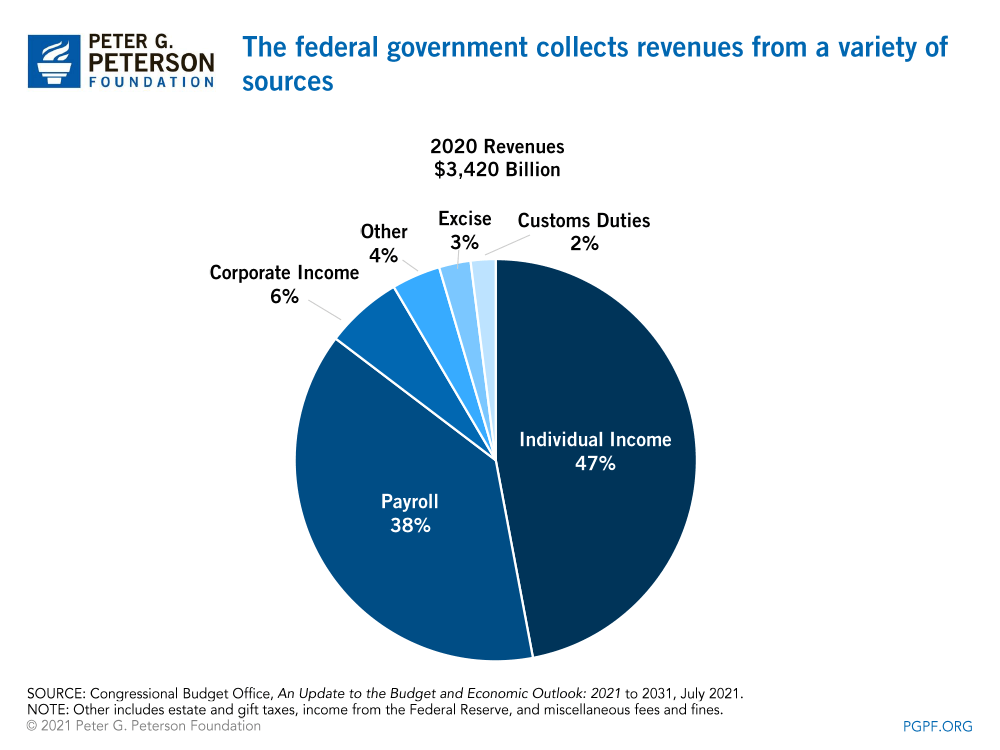
SOURCE: Data from the Congressional Budget Office, The Budget and Economic Outlook: Fiscal Years 2012 to 2023, February 2013. Compiled by PGPF.
The federal government collects revenue from a variety of sources. The largest source is taxes on individuals' income and payroll taxes, which together make up four-fifths of federal revenue. Individual income taxes are assessed against wage income and are progressive: that is, the tax rate someone pays increases as their income increases. Payroll taxes are a flat percentage of wage income. They are used to fund Social Security and portions of Medicare. Taxes on corporate profits, estate and gift taxes, excise taxes (a tax levied on a good or service), customs duties, and numerous other taxes comprise the remainder. The Congressional Budget Office expects the federal government took in about $2.5 trillion in revenue last year.
Download: Image | PDF | More Charts
Related Charts:
The Size of Tax Expenditures
5 Biggest Tax Expenditures
Tax Expenditures Compared to Tax Revenues
Who Pays Taxes
Fiscal Commission Tax Proposal
Peter G. Peterson Foundation Chart Pack:

The PGPF chart pack illustrates that budget-making involves many competing priorities, limited resources, and complex issues. In this set of charts, we aim to frame the financial condition and fiscal outlook of the U.S. government within a broad economic, political, and demographic context. Download (.PDF)