




Voters: National Debt Needs to Be Part of the Debates


Though the national debt hasn’t been a focal point of the election conversation thus far, American voters want that to change – and they see the debates as a perfect opportunity. New polling shows that voters want Hillary Clinton and Donald Trump to address the national debt in the upcoming debates.
Roughly nine in ten of the voters polled agree the national debt should be a topic in the debates, with clear consensus among Democrats (89%), Independents (91%), and Republicans (95%). Over four-fifths of the respondents also agree that debate moderators can show that they want to focus on serious issues by covering the debt.
The poll, which was conducted Global Strategy Group and North Star Opinion Research, also found that 81% of respondents (77% of Democrats, 87% of Republicans, and 81% of Independents) believe that the presidential candidates should be paying more attention to the national debt in general. Furthermore, a clear majority (81%) agree the debt is one of the top issues their generation should care about in this year’s presidential election.
The debates will be held:
- Monday, September 26, at Hofstra University, from 9:00 pm to 10:30 pm ET. Lester Holt (anchor, NBC Nightly News) will moderate.
- Sunday, October 9, at Washington University in St. Louis, from 9:00 pm to 10:30 pm ET. Martha Raddatz (chief global affairs correspondent and co-anchor of This Week, ABC) and Anderson Cooper (anchor, CNN) will moderate.
- Wednesday, October 19, at University of Nevada, Las Vegas, from 9:00 pm to 10:30 pm ET. Chris Wallace (anchor, Fox News Sunday) will moderate.
Voters can let the candidates know that they want to hear about the national debt in this year’s debate by signing up for our Thunderclap campaign before the first debate on September 26, 2016.
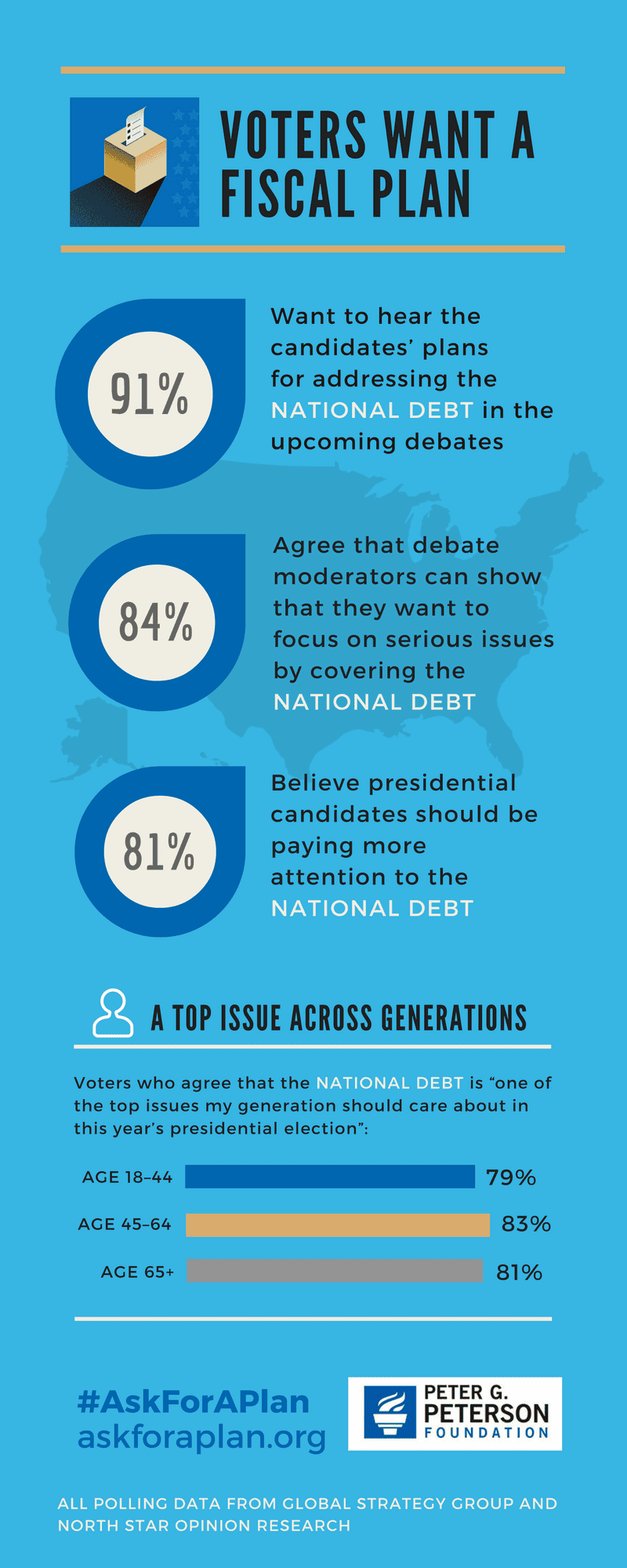
Image credit: Getty Images/iStockphoto
Further Reading
What Are Interest Costs on the National Debt?
Interest costs are on track to become the largest category of spending in the federal budget.
7 Charts That Illustrate America’s Growing Fiscal Stress
America’s fiscal situation is daunting, with key budgetary warning signs and hurdles approaching in the near term.
Fed Raises Rates for First Time Since 2023 as Interest Costs Top $1 Trillion
High interest rates on U.S. Treasury securities increase the federal government’s borrowing costs.