




National Debt a Critical Election Issue for Swing State Voters

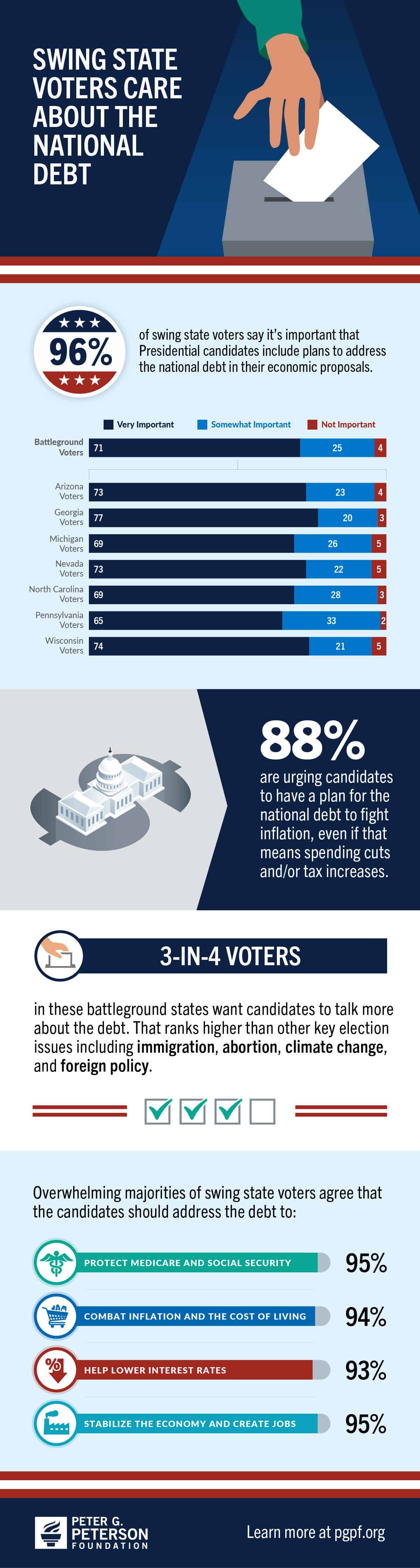
As we enter the final stretch of the 2024 election, Vice President Harris and former President Trump are tied across swing states – and new polling shows that the national debt is a critical issue for voters in these decisive states. More than 9-in-10 voters across seven key states — Arizona, Georgia, Michigan, Nevada, North Carolina, Pennsylvania and Wisconsin — say it’s important for candidates to have a plan for the debt, including 95% of Harris voters, 97% of Trump voters and 95% of undecided voters.
Additionally, 3-in-4 voters in these battleground states say they want candidates to talk more about the debt and their plans to address it – outpacing the percentages of voters who say the same for other hot button election issues including immigration, abortion, climate change and foreign policy.
Thus far neither candidate has put forward a plan to address or $35 trillion national debt. A recent analysis from the Committee for a Responsible Federal Budget estimated that Harris’s campaign plan would increase the debt by $3.50 trillion through 2035, while President Trump’s plan would increase the debt by $7.50 trillion. But there’s still time for candidates to put forward plans, and there are many policy options to choose from.
Further Reading
7 Charts That Illustrate America’s Growing Fiscal Stress
America’s fiscal situation is daunting, with key budgetary warning signs and hurdles approaching in the near term.
Fed Raises Rates for First Time Since 2023 as Interest Costs Top $1 Trillion
High interest rates on U.S. Treasury securities increase the federal government’s borrowing costs.

Bond Market Movements Point to Growing Fiscal Risks
As ratings agencies have serially warned, U.S. debt growth is unsustainable, and global investors appear to be weighing the risks of financing U.S. deficits more heavily.