




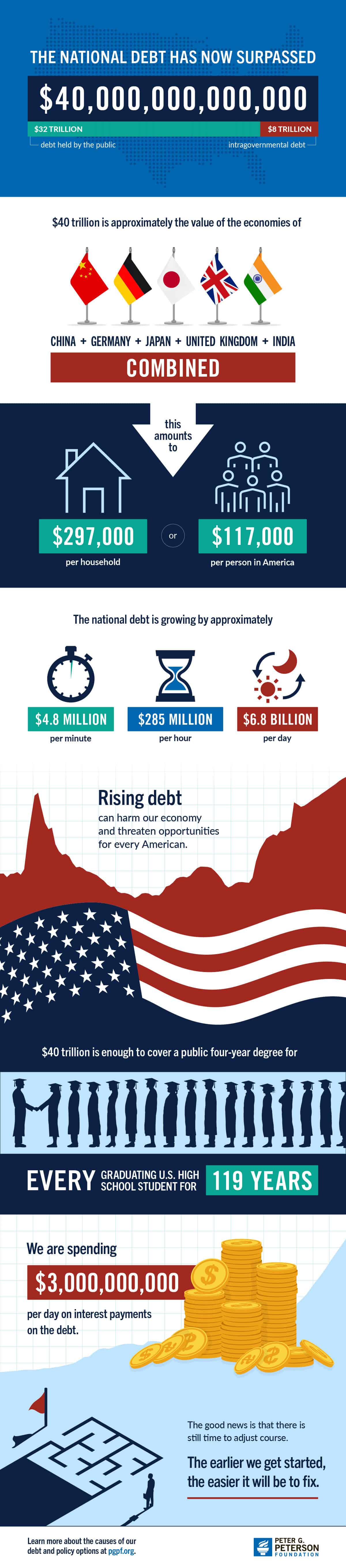
Infographic: The National Debt Is Now More than $40 Trillion. What Does That Mean?

The gross federal debt of the United States has surpassed $40,000,000,000,000. Although the debt affects each of us, it may be difficult to put such a large number into perspective and fully understand its implications. The infographic below offers different ways of looking at the debt and its relationship to the economy, the budget, and American families.
America’s high and rising debt matters because it threatens our economic future. The COVID-19 pandemic rapidly accelerated our fiscal challenges, but we were already on an unsustainable path, with structural drivers that existed long before the pandemic. Putting our nation on a better fiscal path will help ensure a stronger and more resilient economy for the future.
Further Reading

Quarterly Treasury Refunding Statement: Borrowing Could Rise Soon
The U.S. Treasury has signaled its intention to add $1.4 trillion in new debt between July and December.

What Are Interest Costs on the National Debt?
Interest costs are on track to become the second largest category of spending in the federal budget.

7 Charts That Illustrate America’s Growing Fiscal Stress
America’s fiscal situation is daunting, with key budgetary warning signs and hurdles approaching in the near term.