




Social Programs
Ensuring the sustained structural and financial strength of social programs is a priority for our nation.
Few federal programs are as central to our economy, society, and federal budget as income security programs. Social Security and Medicare are America’s largest social programs, providing critical retirement and health benefits to millions. These programs, however, rest on unstable financial footing as a result of an aging population and rising healthcare costs.
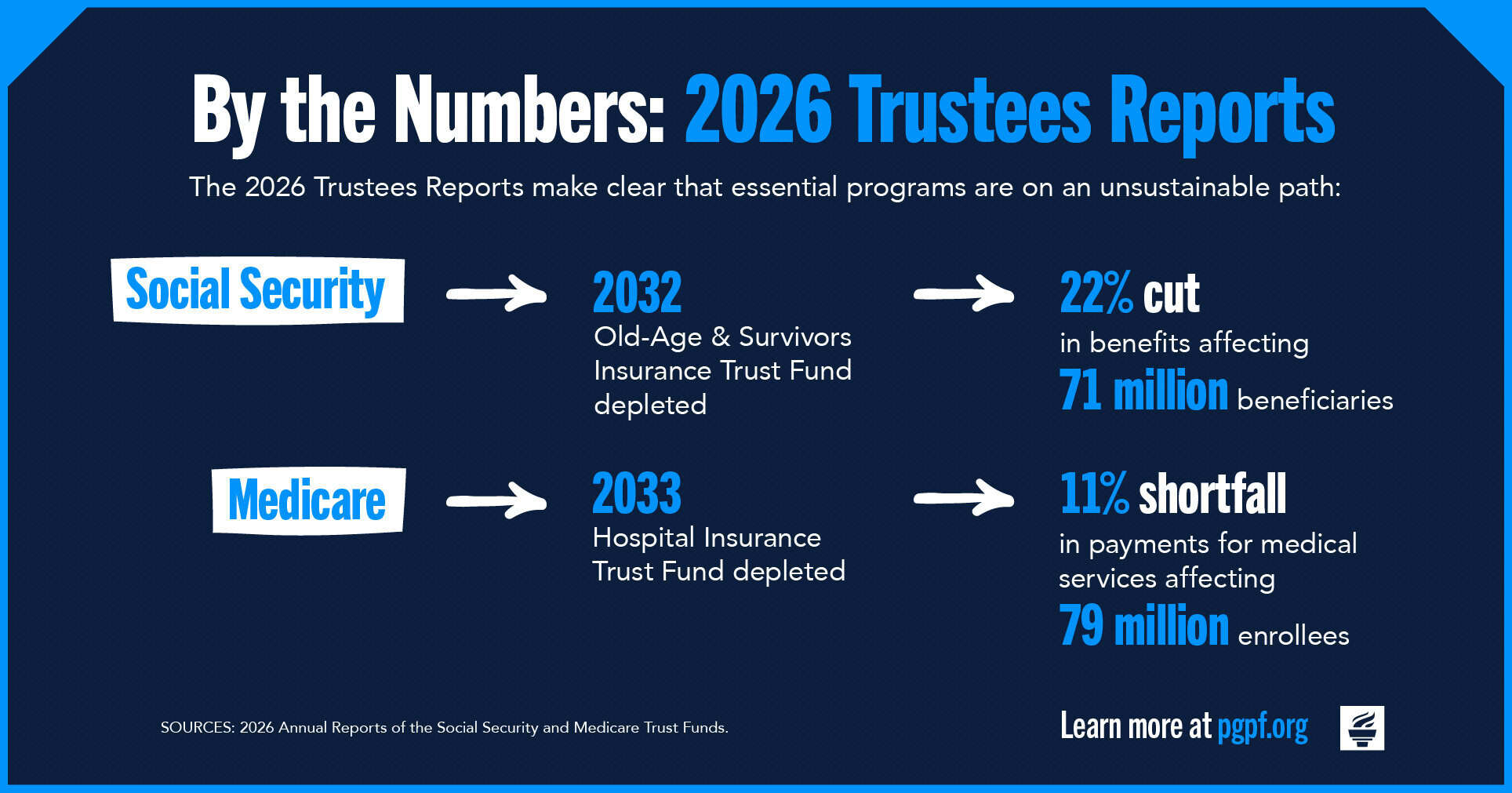
Every year, the Social Security and Medicare trustees report on those programs’ finances. The latest reports project that Social Security’s Old-Age and Survivors Insurance (OASI) Trust Fund will become depleted in 2032 and Medicare’s Hospital Insurance (HI) Trust Fund will become depleted in 2033. At that point, benefits for the respective programs would face significant and sudden automatic cuts, unless lawmakers enact reforms before then.
- If lawmakers allow Social Security’s OASI Trust Fund to become depleted in 2032, 71 million beneficiaries would face across-the-board benefit cuts of 22 percent. The Committee for a Responsible Federal Budget estimated that benefits would be cut by approximately $18,400 per year for the typical retiring couple.
- If lawmakers allow Medicare’s HI Trust Fund to become depleted in 2033, there would be an 11 percent cut in payments to hospitals and other providers that serve America’s elderly population.
The promising news is that it is entirely within policymakers’ control to shore up Social Security and Medicare and preserve them for the future. Doing so will not only protect millions of beneficiaries — especially our most vulnerable citizens — but will also provide stability and strength to our fiscal and economic outlook.
Other Social Programs:
In addition to Medicare and Social Security, there are a range of social programs serving Americans, including spending programs and tax benefits:
- Health programs — including Medicaid, the Children’s Health Insurance Program (CHIP), and premium tax credits for low- and moderate-income people.
- Income Security Programs — including the Supplemental Nutrition Assistance Program (SNAP), Supplemental Security Income, Unemployment Compensation, the refundable portion of the Earned Income and Child Tax Credits.
Generally, lawmakers do not provide specific funding levels for those social programs. Instead, they specify the rules of eligibility for benefits as well as the type and level of benefits that each person can receive. For example, the unemployment insurance program has eligibility criteria that, once met, allow an individual to receive a certain level of benefits. Total spending on the program depends on the number of people who file for unemployment, rather than a fixed amount of funding set by lawmakers.
Many policy solutions exist for improving the financial outlook of Social Security’s retirement program.
Policy Options
Thoughtful health policy reforms can address fiscal concerns, protect Medicare beneficiaries, and enhance efficiency and outcomes in the overall healthcare system.





Policy Options