




The debt ceiling, also known as the debt limit, is the maximum amount of money that the U.S. Treasury can borrow. Increasing the debt ceiling allows the Treasury to borrow funds to pay for government obligations that have already been incurred as the result of laws and budgets approved by the President and the Congress.
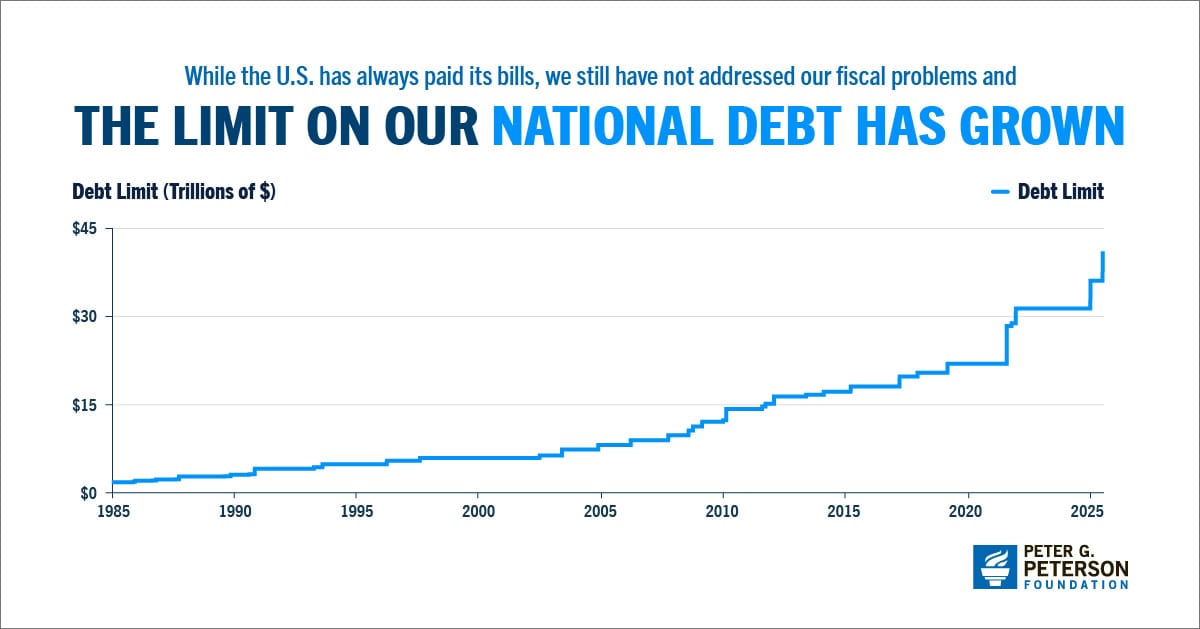
Legislation signed into law in July 2025 extends the debt ceiling by $5 trillion — from $36.1 to $41.1 trillion.
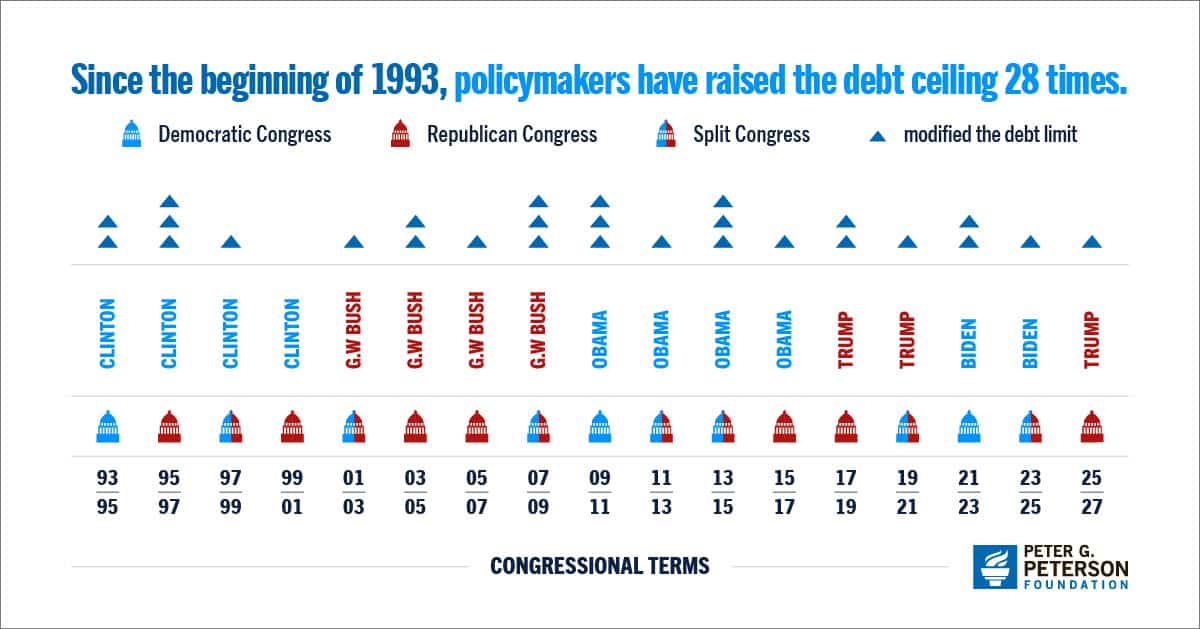
Why is understanding the debt ceiling important and what are the implications for our economy and our fiscal condition? The infographic below explains. For more details, see our analysis on the debt ceiling.
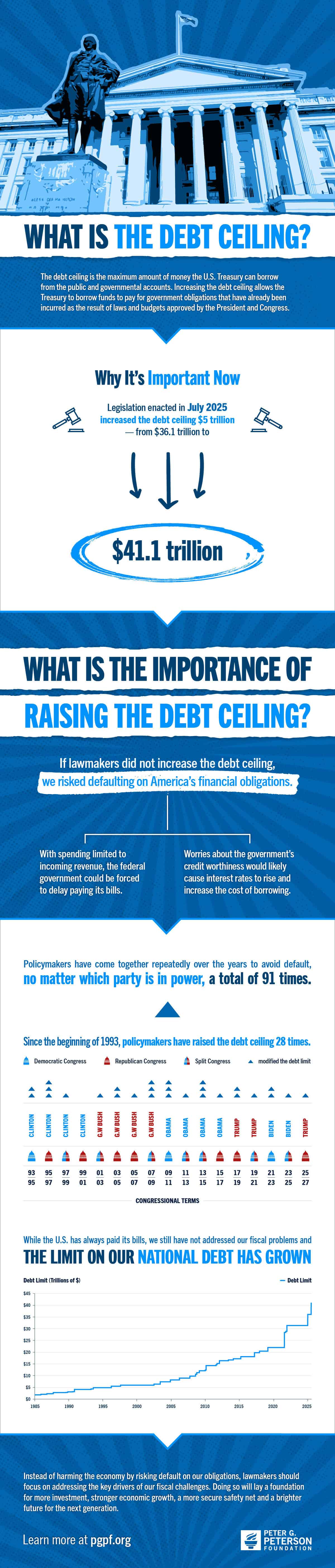
Feel free to share this infographic on Twitter.
Further Reading

What Is SNAP? An Overview of the Largest Federal Anti-Hunger Program
SNAP has a positive effect on poverty and food insecurity, with a relatively small effect on the federal budget.

Budget Basics: Federal Trust Funds
Federal trust funds bear little resemblance to their private-sector counterparts.

Spending on Veterans in the Budget
Federal spending for veterans has increased relatively sharply in the past two decades as scores of veterans returned home from extended wars in Iraq and Afghanistan.